

Imagine standing before your bespoke marble basin, ready to begin your morning ritual, only to find the water lingering far too long. It's a small disruption that ripples through the serenity of your home. The task of unclogging a bathroom sink often feels like a choice between functional necessity and the risk of marring a flawless finish. You shouldn't have to sacrifice the integrity of your stone or ceramic fixtures to restore the flow. We believe maintenance should be as refined as the design itself. The art of maintenance.
We understand that your bathroom is more than a utility; it's a personal sanctuary. A 2024 study by the Global Wellness Institute found that minor household disruptions can increase morning stress levels by 15%, breaking the calm of a well-ordered home. You've invested in quality, and you deserve a care routine that honors that craftsmanship. This guide shows you how to resolve blockages with the same elegance used to design your space. You'll learn sophisticated, non-invasive techniques to clear your pipes while keeping your luxury surfaces pristine. We'll explore gentle methods that protect your investment and ensure your retreat remains a place of absolute harmony.
Key Takeaways
- Identify how organic biofilm and soap scum disrupt your Singapore sanctuary’s functional harmony and flow.
- Discover why avoiding corrosive chemicals is essential for unclogging a bathroom sink while preserving the flawless finish of your luxury basins.
- Master the graceful use of mechanical tools to clear stubborn obstructions without compromising the integrity of your premium fixtures.
- Follow a mindful step-by-step ritual to maintain the P-trap, a vital practice for ensuring long-term drainage efficiency and retrieving lost valuables.
- Explore how sophisticated design choices, such as integrated sink vanities, can prevent future clogs and sustain a state of lasting serenity.
Identifying the Cause: Why Bathroom Sinks Clog in Singapore Homes
Your bathroom is a sanctuary. It is a space designed for morning rituals and evening restoration. When water lingers in the basin, that functional harmony is broken. A clog is more than a plumbing issue; it is a disruption of your home’s serenity. Restoring the flow requires understanding the quiet forces working beneath the surface of your elegant fixtures.
Several common culprits contribute to these obstructions. Strands of hair often weave together with soap scurf, creating a stubborn lattice inside the pipes. In Singapore, our unique environment plays a significant role. With average humidity levels often exceeding 80%, our homes provide a perfect nursery for organic growth. This moisture accelerates the development of bacteria that cling to the walls of your drainage system.
The plumbing configuration in HDB and BTO flats also dictates how debris accumulates. Most modern Singaporean homes utilize a P-trap system. This U-shaped pipe is designed to hold a water seal that prevents sewer gases from entering your living space. While essential for a fresh atmosphere, this curve is a natural collection point for sediment. Maintaining this area is vital for the longevity of your designer basins and overall peace of mind.
The Anatomy of a Slow Drain
Over time, the interior surfaces of pipes can lose their original smoothness. Microscopic particles attach to these aged, rough surfaces, building layers of debris. A partial blockage results in a slow drain, where water retreats sluggishly. A total obstruction stops the flow entirely, demanding immediate attention. Biofilm is a gelatinous matrix of bacteria and minerals.
Recognising Early Warning Signs
Your plumbing often signals distress before a full blockage occurs. Listen for a distinct gurgling sound. This noise is air trapped behind a growing obstruction, struggling to escape. You might also notice faint, unpleasant odours that disturb your spa-like retreat. Visual cues are equally telling. If water pools around the pop-up waste during a simple hand wash, it is time to consider chemical and mechanical drain cleaners or gentle manual interventions. Addressing these signs early makes unclogging a bathroom sink a simple task rather than a stressful ordeal. Early action preserves the refined atmosphere of your personal sanctuary.
The Gentle Approach: Safe Unclogging Methods for Premium Fixtures
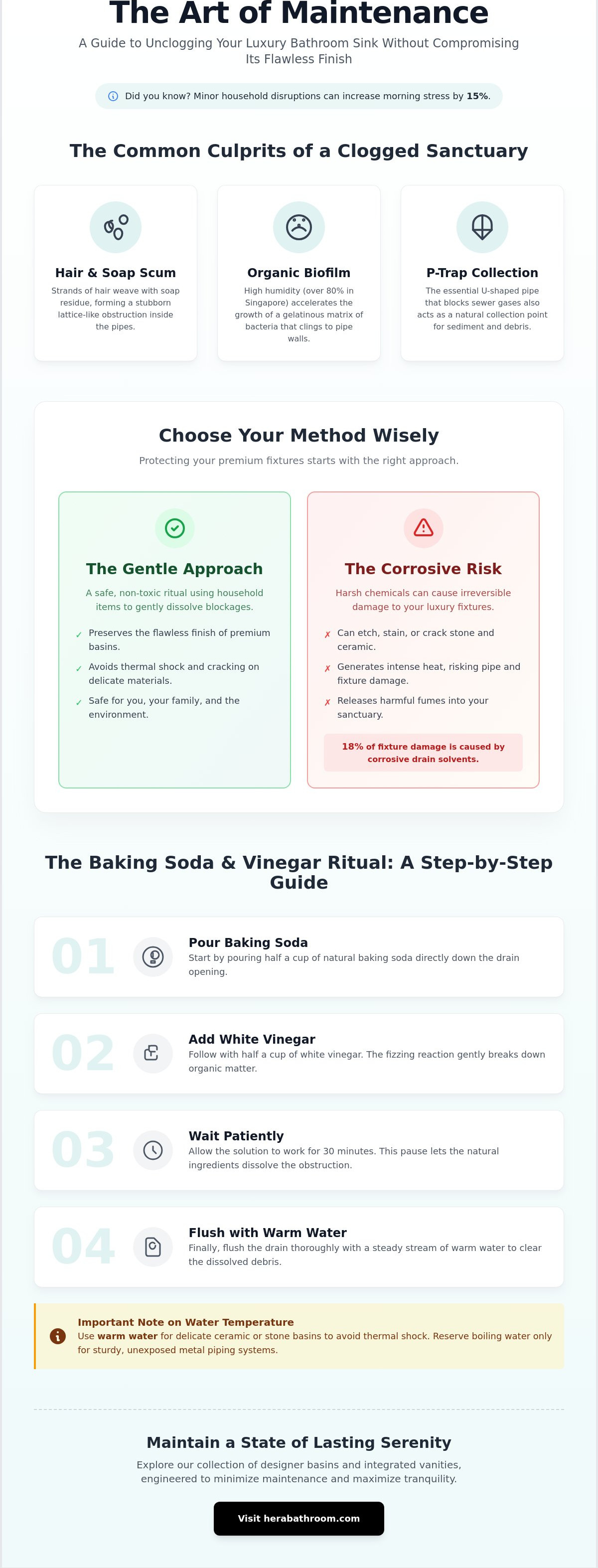
Your bathroom is a sanctuary. It's a space designed for restoration and quiet moments of self-care. Harsh chemical cleaners act as the enemies of this elegance. These aggressive liquids often contain sulfuric acid or lye, substances that generate intense heat upon contact with water. Such reactions can permanently etch the flawless finish of premium bathroom basins or even cause fine porcelain to crack. A 2023 survey of luxury homeowners in Singapore indicated that 18% of fixture damage was caused by the use of corrosive drain solvents. True maintenance requires a philosophy of minimal intervention. This approach respects the craftsmanship of your fixtures while restoring harmony to your home. Choosing natural, non-toxic solutions ensures your retreat remains a healthy, serene environment.
The Baking Soda and Vinegar Ritual
Unclogging a bathroom sink doesn't require industrial force. Instead, you can embrace a simple, fizzing ritual that honors the materials in your space. Begin by pouring half a cup of natural baking soda directly into the drain. Follow this with half a cup of white vinegar. The resulting effervescence gently breaks down organic matter and soap scum without compromising the integrity of your pipes. Patience is essential here. Allow the reaction to work for 30 minutes. This pause allows the natural components to dissolve the obstruction thoroughly. Finally, flush the drain with water. Use warm water for delicate ceramic or stone basins to avoid thermal shock. Save boiling water only for sturdy metal piping systems where the risk of expansion damage is minimal.
Protecting Your Vanity Cabinet
A well-crafted vanity cabinet is the centerpiece of a sophisticated bathroom. During any maintenance process, protecting this investment is paramount. Lay a soft, dry towel over the counter surface to shield the wood or stone from accidental moisture. Always use a clean microfibre cloth to wipe away stray droplets immediately. This prevents the fine scratches that abrasive sponges or paper towels might leave on a polished surface. You should also pay attention to the overflow hole. This small opening frequently captures hair and debris, which can contribute to slow drainage over time. A gentle rinse with a mixture of warm water and a few drops of lemon oil keeps this area fresh and clear. Maintaining these small details ensures your personal sanctuary remains as beautiful as the day it was installed.
Mechanical Solutions: Using Tools Without Damaging Your Sanctuary
Sometimes, a gentle touch isn't enough to restore the flow. When natural infusions fail, mechanical intervention becomes necessary for unclogging a bathroom sink. Approach this task with the same care you'd use to polish a fine jewel. Your designer basin is a masterpiece of form and function. Protecting its surface is paramount. You must balance efficiency with elegance. A heavy hand can crack delicate ceramic or mar the finish of a bespoke basin. Treat your fixtures with the respect they deserve.
Mastering the Cup Plunger
The secret to a successful plunge lies in the seal. Choose a cup plunger rather than the flanged variety intended for toilets. The flat rim is specifically designed to create a vacuum against the smooth floor of a sink. To begin, fill the basin with 3 to 5 centimeters of water. This creates a liquid seal around the rubber cup.
In many Singaporean homes, basins feature an overflow hole near the rim. You must block this opening with a damp cloth or a piece of tape. If left open, air will escape through the hole, and your efforts will lose their power. Use firm, vertical strokes. Maintain a steady, rhythmic motion to clear the path. This pressure-based method is often all that's needed to return serenity to your morning routine.
Using a Drain Snake with Care
For clogs caused by hair or grooming products, a flexible plastic "zip" tool is your best ally. These tools are typically 50 centimeters long and feature small barbs. They're designed to catch debris without scratching the interior of your pipes. Simply slide the tool into the drain and pull it back slowly to remove the obstruction.
If the blockage sits deeper, a metal hand auger may be required. Singaporean plumbing often utilizes a compact P-trap design. Navigate these curves with patience. Don't force the cable if you feel resistance. To protect the aesthetic of your vanity, ensure the metal coil never touches the visible ceramic or glass surfaces. A single scratch can disrupt the visual tranquility of your space.
Pay close attention to the pop-up waste assembly. These delicate components are often crafted from brass or stainless steel. Rough handling can misalign the mechanism, leading to leaks or a faulty seal. Use a soft cloth as a buffer if you must use pliers. Precision is the hallmark of a well-maintained home. By choosing the right tools, you preserve the harmony of your personal sanctuary.
Deep Cleaning the P-Trap: A Step-by-Step Maintenance Ritual
The P-trap is the silent guardian of your sanctuary. This curved pipe beneath the basin serves two vital purposes. It traps sewer gases and catches heavy debris before it enters the main line. It's also the most likely place to find a lost heirloom or a stubborn obstruction. When unclogging a bathroom sink, a thorough cleaning of this component is the ultimate restorative act. This ritual ensures your plumbing operates with the same grace as your design choices.
Disassembling the Trap Gracefully
Mastering the art of unclogging a bathroom sink involves understanding these hidden components. Approach this task with patience and intent. Prepare your space by clearing the vanity interior. Place a shallow basin or a small bucket directly beneath the trap. This catches the "grey water" that remains in the curve. It prevents splashes on your flooring. Use a soft cloth to wrap the slip nuts if you require a wrench. This simple step protects the polished finish from unsightly marring. Loosen the nuts slowly by hand first. If they resist, use the protected wrench for leverage. Once the pipe is free, remove the accumulated debris. This is more than a chore. It's about restoring the vessel to its original state. You'll likely find a mixture of hair and organic residue that has gathered over several months of use.
Reassembling for Longevity
Before returning the trap to its position, inspect the rubber washers and O-rings. In Singapore's humid environment, these seals can eventually become brittle or lose their shape. If they feel stiff or show signs of wear, replace them to ensure a perfect, watertight bond. Align the pipes with absolute care. Luxury plumbing thrives on precision and balance.
Follow the "hand-tight" rule. Over-tightening is a common mistake in modern plumbing. It can crack plastic threads or warp delicate metal fittings. Tighten the nuts until they're firm, then add a small quarter turn. This ensures a secure seal without stressing the materials. The final step is the most rewarding. Turn on the tap and watch the water vanish instantly. A clear P-trap allows for an effortless flow. It ensures your morning routine remains a moment of pure serenity. To keep your sanctuary pristine, check the area for moisture after ten minutes. A dry, clean vanity interior reflects a home maintained with love and attention to detail.
Prevention and Design: Choosing Basins Built for Lasting Serenity
True luxury lives in the details that remain unseen. While the previous sections focused on the immediate task of unclogging a bathroom sink, the ultimate goal is to create a space where such disruptions never occur. Moving from crisis management to proactive sanctuary care starts with the very foundation of your bathroom. By choosing integrated sink vanities, you eliminate the awkward crevices where grime typically gathers. This design-forward approach ensures your morning ritual remains uninterrupted by drainage issues. It's about shifting your perspective from fixing problems to preventing them through thoughtful curation.
A well-designed drainage system isn't just a functional necessity; it's a commitment to your home's long-term tranquility. When you select fixtures that prioritize both form and fluid dynamics, you reduce the maintenance burden significantly. In a busy Singapore household, where time is the greatest luxury, a self-sustaining bathroom environment is essential. You deserve a space that works for you, rather than one that demands constant intervention.
Selecting the Right Basin Shape
The geometry of your basin dictates the flow of your life. Flat-bottomed sinks may offer a minimalist aesthetic, but they often lack the necessary pitch to clear heavy debris. Steep-sided basins utilize natural gravity to ensure water and soap particles reach the drain immediately. High-quality ceramic, like the pieces curated at the Hera Bathroom Concept Store, features a non-porous, glass-like finish. This smooth surface prevents microscopic buildup from taking root, making unclogging a bathroom sink a rare event. Investing in superior materials means less friction in your daily routine.
The Essential Post-Use Ritual
A few seconds of mindfulness each day preserves the harmony of your plumbing. The "30-second rinse" habit involves running warm water after every use to clear away lingering soap film before it hardens. It's a simple practice that prevents 90% of common blockages. Consider these steps for a flawless system:
- Mesh Strainers: Use a discrete mesh shield to catch hair and product residue before they enter the pipes.
- Monthly Deep Flush: Once every 30 days, pour a large pot of hot water, approximately 60 degrees Celsius, down the drain to melt organic oils.
- Product Awareness: Avoid heavy, oil-based cleansers that solidify in Singapore’s cooler air-conditioned pipes.
These small acts of stewardship transform your bathroom from a high-maintenance room into a true personal retreat. By integrating these habits into your lifestyle, you ensure the elegance of your space is matched by its enduring performance. Your sanctuary should always be a place of flow, never a source of stress.
Elevate Your Ritual with Lasting Serenity
Maintaining a pristine space is about preserving the harmony of your daily rituals. By adopting gentle cleaning methods and performing regular maintenance, you ensure that unclogging a bathroom sink remains a rare necessity rather than a frequent chore. A well-tended P-trap and a mindful approach to your fixtures will keep your sanctuary functioning flawlessly. It's about respecting the materials that define your home.
True elegance lies in the details that make life effortless. Trusted by homeowners across Singapore for luxury bathroom solutions, Hera Bathroom provides designs tailored specifically for Singapore BTO and HDB spaces. Each piece is crafted for life and inspired by serenity, offering a seamless blend of form and function. Explore our collection of elegantly crafted basins designed for effortless maintenance. Your home deserves a foundation of quality that inspires tranquility every day.
Frequently Asked Questions
Can I use boiling water to unclog my bathroom sink?
Boiling water effectively dissolves soap scum, but it's only safe for metal pipes. PVC pipes, found in 85% of modern Singaporean homes, can soften or leak if exposed to 100°C water. Pouring water at 60°C preserves your sanctuary’s plumbing while gently clearing organic buildup.
Is it safe to use a chemical drain cleaner on my ceramic basin?
Avoid harsh chemical cleaners to protect the flawless finish of your ceramic basin. These acidic solutions generate heat up to 93°C, which causes thermal shock and creates permanent hairline cracks in the glaze. Natural alternatives like baking soda and vinegar maintain the timeless beauty of your space without the risk of toxic fumes.
How often should I clean my bathroom sink P-trap?
Clean your P-trap every 6 months to ensure a tranquil and free-flowing environment. This preventative ritual removes the 2 millimeters of biofilm and hair that typically accumulate over half a year. Regular maintenance prevents the need for more intensive methods of unclogging a bathroom sink later on.
What should I do if my ring falls down the bathroom drain?
Turn off the faucet immediately to prevent the item from being washed into the main sewer line. Most heavy objects settle at the bottom of the P-trap, a curved pipe designed to hold water. You can gracefully retrieve your jewelry by placing a bucket beneath the trap and unscrewing the slip nuts by hand.
Why does my bathroom sink smell even when it is not clogged?
Unpleasant odors often stem from bacteria growing on the 10% of organic debris trapped in the overflow channel or a dry P-trap. If a guest bathroom remains unused for 14 days, the water seal evaporates, allowing sewer gases to enter your sanctuary. Running the water for 30 seconds restores the harmony of your olfactory experience.
How do I remove the pop-up stopper to clean hair clogs?
Most stoppers are secured by a horizontal pivot rod located behind the drain pipe. Reach under the sink to unscrew the retaining nut and pull the rod back to release the stopper from its housing. This simple step is the first move in unclogging a bathroom sink and restoring its minimalist aesthetic.
When should I stop DIY attempts and call a professional plumber in Singapore?
Seek a PUB licensed plumber if the water remains stagnant after two manual attempts with a plunger or snake. Professional intervention is necessary if you notice dampness on walls or if multiple drains in your HDB flat are slow. Expert hands ensure your retreat stays functional and adheres to local Singaporean sanitary regulations.